Scroll the box above to see our upcoming events!

Posted in Uncategorized | Comments Off on

Noah Frost on Blackfoot River Cutthroats

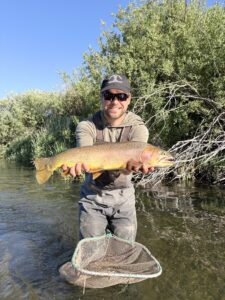
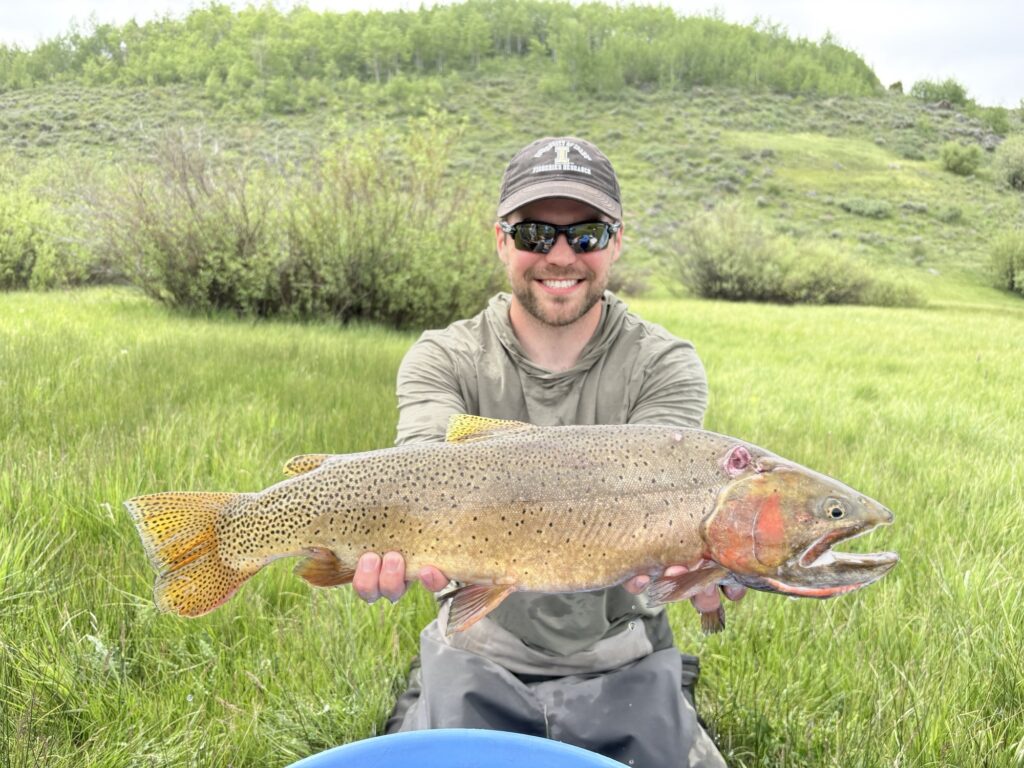
Noah Frost is a repeat recipient of a scholarship from Idaho Trout Unlimited. He will continue his studies at the University of Idaho, 2026-27. His essay below get into the cutthroat trout research in the Blackfoot River. – Ed.

Fisheries managers and conservation organizations are lacking Yellowstone Cutthroat
Trout population metrics in the upper Blackfoot River, Idaho. I am conducting a hands-on
investigation that will identify factors influencing population demographics in the system.

Over the past year, I developed a study design and sampled over 4,400 Yellowstone Cutthroat Trout throughout 37 miles of mainstem habitat. I tagged over 3,000 Yellowstone Cutthroat Trout with passive integrated transponder (PIT) tags and installed five PIT antennas throughout the study area to document movement of tagged fish. The first year of my research was incredibly successful. Results from my research will identify factors limiting fish production and survival in the system, ultimately informing conservation measures (e.g., habitat restoration) in the study area and in similar systems throughout the region.

My first field season yielded a large amount of fish and habitat. During the next year, I
will replicate field sampling, analyze collected data and write a thesis. In addition to hands-on fisheries experience, I will continue to learn advanced analytical techniques and improve my scientific writing. These skills will allow me to apply and compete for fisheries biologist positions with natural resource agencies. Perhaps most important, my work in the Blackfoot River is highly collaborative and communication among state, federal, and non-governmental organizations will be critical to effective management in the system.

I have built meaningful relationships with biologists and managers throughout my time as
a technician. The next step to attaining my lifelong goal of becoming a fisheries biologist is
completing this Masters program. The financial support from scholarships such as this one will be instrumental in helping me reach this goal for many reasons. First, my field station is located on public land at 6,500 ft elevation in the headwaters of the Blackfoot River. I live in a tent from May through August while sampling fish and surveying habitat. As you may imagine, living and working off the grid for several months is a challenging endeavor that requires the highest quality gear and extensive preparation. Next, documenting movement of Yellowstone Cutthroat Trout as temperature decreases during the fall is incredibly important for describing life history structure and identifying potential thermal constraints. Travel from Moscow to my field station during the semester to manage PIT arrays increases my financial strain during this program.

Additional financial support will allow me to purchase previously unbudgeted supplies (i.e., additional PIT tags, field groceries) and travel to and from my field station to manage remote PIT arrays during the shoulder seasons. I am not able to work a second job during this project, and support from conservation organizations like TU will ensure that the final product of this research is of top quality. Ultimately leading to meaningful conservation implementation and compounding benefits to Cutthroat Trout generally. Again, I thank you for your consideration and look forward to hearing form you.

Posted in Uncategorized | Leave a comment

Luke Anderson Essay: Idaho Trout Unlimited Graduate Scholarship Winner

Luke Anderson, one of two scholarship winners from Idaho Trout Unlimited, will continue his studies at the University of Idaho, 2026-27. His essay below, submitted as part of his application for the Idaho State Council Trout Unlimited Graduate Scholarship, details his studies of Northern Pike in Lake Pend Oreille. – Ed.

Northern Esox lucius are a predatory fish that has been introduced widely outside of its native range. Northern Pike first appeared in the Lake Pend Oreille, Idaho system in the 1970s, believed to have spread downstream from Flathead Lake, Montana through the Flathead and Clark Fork rivers. Northern Pike abundances remained low until around 2017 when catch rates began to increase exponentially in Idaho Depart of Fish and Game (IDFG) nets. Given that Northern Pike will preferentially consume soft-rayed fishes, e.g., salmonids and cyprinids, managers are concerned may have a negative effect on native species, particularly Westslope Cutthroat Trout (Oncorhynchus lewisi) and Bull Trout (Salvelinus confluentus). My research looks to describe diets and population dynamics and assess their influence on native species and the existing fish assemblage in Lake Pend Oreille.

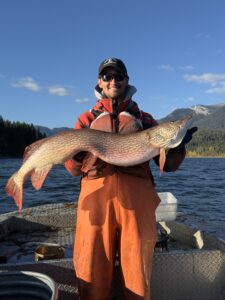
Luke Anderson with a Northern Pike from Lake Pend Oreille.

My research project is directly applicable to my fisheries career in several ways. First, I am gaining experience working on a type of waterbody on which I previously had not worked, i.e., large lake system. Prior to graduate school, much of my fisheries work was in river and stream systems working with anadromous and migratory salmonids. The work associated with my research allows me to diversify my fisheries knowledge and experiences. Second, the data management and analysis I am conducting with my collected data is reflective of analyses frequently done by fisheries biologists. Examples of these include describing age and growth patterns, estimating mortality, exploitation, and recruitment, and modeling ecological interactions.

Last, and most importantly, I am gaining valuable experience in communication. Fisheries biologists need to be able to communicate their data and results effectively, both to other fisheries professionals as well as members of the public. Since the inception of the project, I have discussed various aspects of my project with many members of IDFG and academia, often needing to effectively describe important nuances of the project. Similarly, I am frequently approached by anglers and members of the public at the boat ramp or on the water while sampling. While topics of discussion with the public are similar to those with biologists, the communication styles generally differ as the levels of background understanding and personal values can be significantly different. A fisheries professional needs to be able to effectively communicate with both demographics as the inputs and values from the anglers are equally important to consider when managing the resource.

This scholarship would help me achieve my career goals by assisting in funding travel to professional conferences. As I stated earlier, effective communication is a vital skill to have in this profession, and I would be able to further improve on it at conferences. Many of the people I discuss my hypotheses and results with are familiar with the Lake Pend Oreille system and already have a background understanding of the various components I am researching. By presenting at a conference and discussing my research with outside people with little to no background knowledge of the system, I can further practice my scientific communication skills. Additionally, I will be able to learn about novel ideas and techniques not used in the region, further diversifying my fisheries knowledge with concepts I can apply throughout my fisheries career.

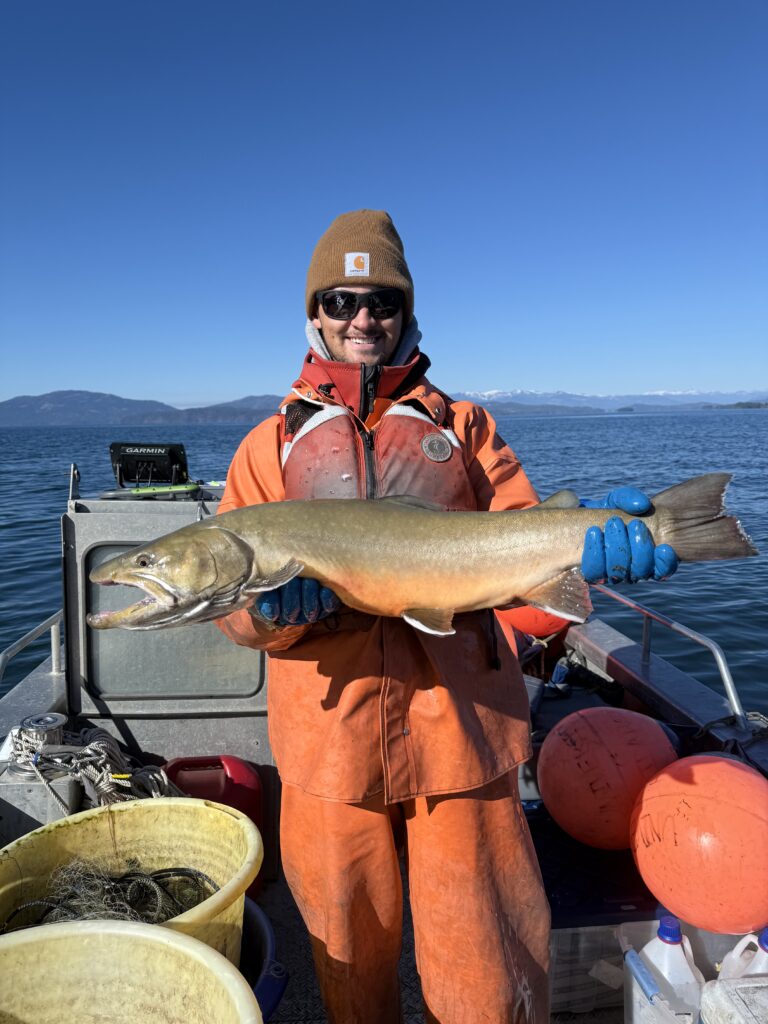
This native bull trout measures 27″ and was released unharmed back in to Lake Pend Oreille.

Posted in Uncategorized | Leave a comment

State Council Meeting Agenda for May 9

Final Agenda Idaho State Council of Trout Unlimited
IDFG Offices Boise, Idaho May 9, 2026

8:30 Coffee / Juice
Sign In

9:00 Start Business Meeting
-Quick Introductions around the room
-Review prior spring meeting minutes and approve.
-Review handout of current contact information and update if needed

9:30 NLC Report M.E. Sorci

9:45 Treasury Report Andy

10:00 Sabrina Beus & Riley Williams – Trout in the Classroom

10:30 Break

10:45 Michael Gibson – Idaho Policy & Staff Update

11:15 Joe K – IDFG

12:15 Lunch

1:00 Eric Crawford – Snake River Campaign

2:00 Chapter Reports / Significant Accomplishments / Finalize Fall Meeting Plans

4:00 Adjourn

Posted in Uncategorized | Leave a comment

Idaho TU Director Erin Plue reflects on 2025

Happy Holidays,

I started at the top of 2025 as the new Idaho State Director. This year has been a bit of a rollercoaster with a shifting landscape for the work we do at Trout Unlimited. At the start of the year when federal funding was paused for a bit things felt uncertain, but what I’ve found is that Idaho’s TU Team stayed steadfast; keeping work moving forward undaunted by the shifts in funding, in agency personnel, in attitudes and outlooks. At the tail end of the year, looking back I feel a lot of pride in TU – our adaptability, ingenuity, and commitment to fish and healthy waterways. I feel more optimistic and inspired about the future of our work at the close of 2025 than ever before.

Here’s a quick review of what got done this year and where focus will be in the upcoming year.

This year the Idaho conservation and restoration team:

  • Installed 154 log structures containing 1,170 logs.
  • Built 203 beaver dam analogs in streams.
  • Restored 6 miles of stream habitat and nearly 18 acres of floodplain.
  • Ran 9 monitoring projects and assessed over a thousand culverts for fish passage.
  • Planted over 1,500 plants.
  • Taught about fish and habitat to thousands of children and adults.
  • Coordinated two robust watershed collaboratives on the SF Boise and on the Priest River in their process of building restoration plans for these critical basins.
  • Signed agreements new multi-year, well-funded agreements with the Bureau of Reclamation, the Nez Perce Tribe, and the Bureau of Land Management.

Our Policy efforts focused on:

  • Protecting federal lands through advocacy efforts and meetings with Idaho’s influential Congress members and their staff.
  • Meeting with state legislators to serve as a voice for fish in a time when water instream is becoming more threatened and uncertain.
  • Some of the big threats to Idaho’s waterways including mining proposals, large water right claims, and supporting the Chapters when able on local issues.

Looking forward into 2026:

  • Restoration: With 26 individual stream projects on the docket for implementation next year, the team will continue to get meaningful work done on the ground improving habitat and reconnecting waterways across Idaho.
  • Aquatic Connection: We are coordinating across Idaho to assess fish barriers in priority geographies to help better guide project identification increasing benefit for trout and salmon.
  • Communications: Improving our communication about the important work that the Idaho team is doing and the challenges that our trout and salmon populations are facing is high priority for Idaho.
  • Federal Policy: On federal policy we will stay committed to fighting for keeping federal lands federal, Roadless Areas roadless, and the Clean Water Act meaningful.
  • State Water Policy: On a state level we will be expanding our presence in the Upper Snake and increasing coordination across the entire Snake Basin as pressure on our water resources continue to mount.

This year has been challenging, but also offered an opportunity for growth, evolution, and gratitude that has not been missed. The Idaho Team is grateful for your support, efforts, and partnership in our shared goals of caring for streams and rivers so that future generations can also experience the joy of wild trout and salmon. We appreciate all that you do and look forward to continuing in this meaningful work alongside you in 2026.

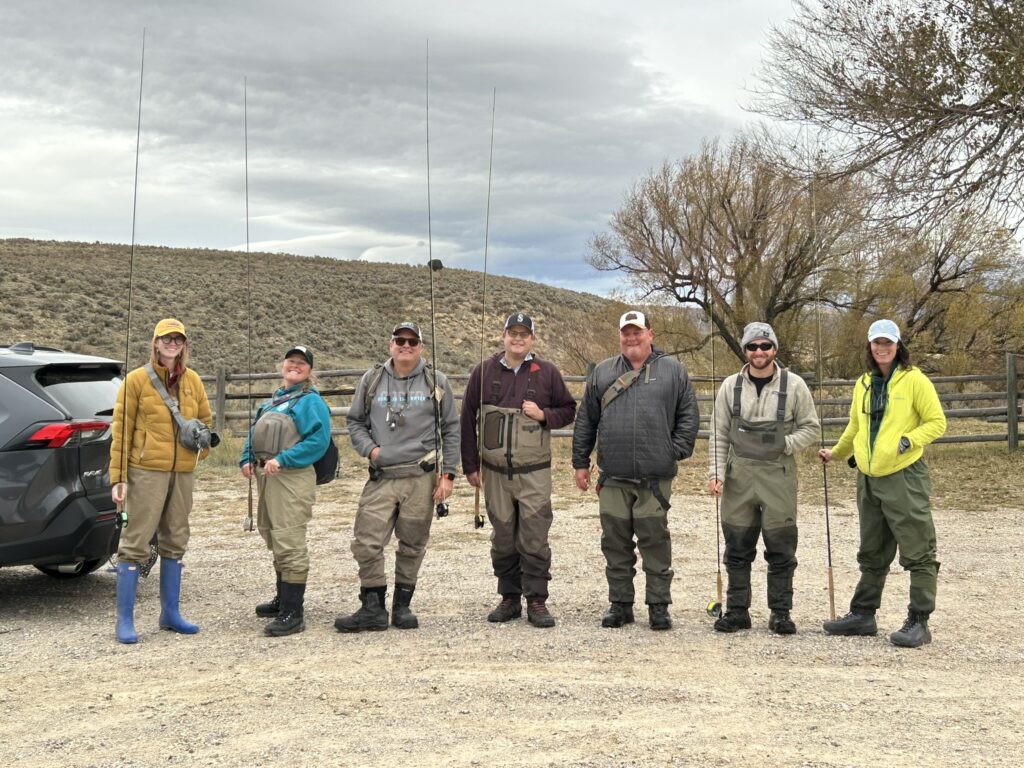
Happy New Year from Team Idaho TU (some of whom are shown below on their way to fish the Portneuf River)!

Posted in Uncategorized | Leave a comment

A 2025 reflection on salmon and steelhead

From Eric Crawford

Dear friends,

As we close out another year of the Snake River campaign, it feels right, though perhaps a bit cliché, to pause and reflect where we found inspiration, what we accomplished, where we fell short, and how all of it shapes our vision for a brighter future.

This fall, I had the privilege of spending time with some of the fiercest advocates for salmon and steelhead in the Snake River Basin. Alongside Trout Unlimited’s videographer, Josh Duplechian, I traveled to the upper Salmon Basin, the small town of Riggins, Idaho, and the even smaller town of Minam, Oregon. Our goal was to capture what these fish mean to the people, communities, and watersheds they touch.

The stories we heard were remarkable. From grandparents sharing the magic of wild steelhead spawning just steps from their front door to outfitters whose livelihoods depend on Idaho’s most treasured species, Chinook salmon and steelhead. We met those who have fought for decades to restore wild fish, sharing their experiences with customers and clients and even members of Congress from the quiet vantage point of a drift boat on the Salmon River. And we listened to a man whose family has lived along the Snake River for five generations, recounting how its tributaries sustained his community and fueled a lifelong pursuit of the elusive steelhead in the Grande Ronde Basin.

These encounters reminded me why a free-flowing lower Snake River and healthy, abundant wild salmon and steelhead matter so deeply. These fish connect us to place, to tradition, to each other in ways that bring joy and meaning to those fortunate enough to experience them.

We captured these moments in photographs and film, and we look forward to sharing these stories with you in the coming year.

As much as I’d like to frame this past year as a triumph for Snake River salmon and steelhead, it wasn’t. We saw the termination of the Resilient Columbia River Agreement and the Columbia Basin Restoration Initiative, a framework that offered hope for recovery and restoration across the basin. These were significant setbacks. Yet, they were also guiding lights: the first of their kind to chart a path toward healthy, abundant salmon and steelhead while balancing the basin’s diverse social, ecological, cultural, and economic interests. That vision remains critical, and it will continue to shape our work ahead.

In August, Trout Unlimited partnered with the Nez Perce Tribe to host a field tour in the Wallowa Basin. The focus was on wild summer Chinook returning to the Lostine River to complete their circle of life, a powerful reminder of what’s at stake.

We heard from Nez Perce tribal members about the historical and cultural significance these fish once held, and how that legacy has been diminished by declining returns. We met an outfitter who shared how the basin’s fisheries sustain his small business and ripple through the local economy, supporting guides, purveyors, and service providers while allowing him to provide for his family and remain deeply connected to the waters of northeast Oregon.

We also visited a cattle rancher who took it upon themselves to restore a section of the Wallowa River simply because it was the right thing to do. Today, they speak with pride about improved rainbow trout fishing, spawning salmon and steelhead in the restored reach, abundant wildlife using the riparian corridor, and their hope to one day see the return of Pacific lamprey.

Your commitment made a difference. This year, we saw over 4,800 actions taken, calls and messages to local and federal officials in support of wild salmon and steelhead recovery. Even in a year of tough news, you showed up: educating yourselves on the nuances of the Snake River campaign with 3,700 blog views, reading, learning, and becoming informed advocates.

We were thrilled to see the reach of our partnership with MeatEater through Ryan Callaghan’s Cal in the Field episode, Problem Dams and Tribal Fishing Rights which explored the lower Snake River issue with insight from Nez Perce Tribal Chairman Shannon Wheeler.

Finally, we launched our campaign rebrand: No More Lower Four. If you haven’t already, place your order today and show your support for recovering wild Snake River salmon and steelhead.

Current events

On December 17, the Northwest Power and Conservation Council released its draft amendments to the Fish and Wildlife Program, a five-year plan that guides the Council in fulfilling its legal obligation to enhance, mitigate, and protect fish and wildlife impacted by the federal hydropower system. Trout Unlimited will continue its engagement, following up on recommendations we previously submitted and ensuring the Council meets its responsibilities under the Northwest Power Act to balance the region’s power needs with the protection of fish and wildlife resources.

Meanwhile, parties to National Wildlife Federation v. National Marine Fisheries Service have initiated litigation, with plaintiffs filing a request for immediate injunctive relief. The core objective: reduce water transit time for juvenile salmon and steelhead migrating through the hydrosystem. Proposed operational changes include increased spill and minimum operating pool levels, actions most likely to achieve these results. A decision from the U.S. District Court for Oregon is expected soon.

With a new year quickly approaching, we’re in the process of building our campaign for the new year, all of which includes our most important asset, each of you. We’ll continue our deep engagement with our partners in the Columbia Snake River Campaign, led by the Nez Perce Tribe while keeping you informed and engaged throughout the year.

Time is running out to fulfill your 2025 resolution, to send a note of encouragement to Congress to restore and recover wild salmon and steelhead in the Snake River basin, but we’ve made it easy with this link: https://www.tu.org/lowersnake/ .

I must admit, the Snake River challenge feels overwhelming, and at times our efforts seem small against the currents of change. But I want to provide you with encouragement, like wild salmon and steelhead pushing upstream through powerful whitewater, our shared commitment is mightier than the obstacles ahead. Together, we chart a course toward a free-flowing lower Snake River and the return of wild salmon and steelhead, symbols of resilience and renewal. The journey is long, but hope rises with every individual action we take.

In closing, thank you. Thank you for your continued support, encouragement, dedication and commitment to Snake River wild salmon and steelhead.

Eric Crawford

Snake River Campaign Director

Trout Unlimited

Posted in Uncategorized | Leave a comment

Trout Unlimited & Nez Perce Tribe 2025 Internship Experience

By Shawn Hills

When I first got the TU/NPT internship; I was ecstatic that I would finally be able to go out and help with conservation efforts. Although I have been fortunate enough to grow up in the gateway to Hells Canyon enjoy its many perks, I have never truly understood what conservation looks like.

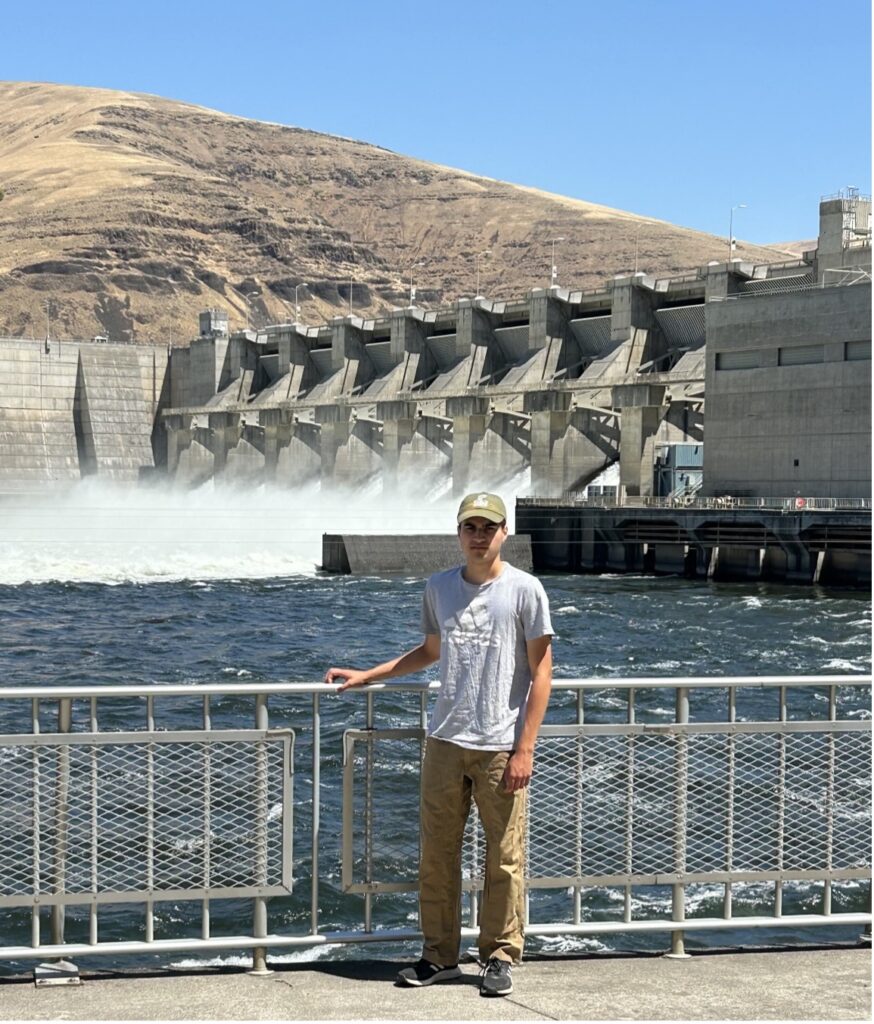
Shawn in front of Lower Granite Dam during a July Tour

First outdoor experience

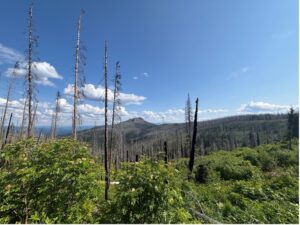
Pilot Knob from neighboring hill

The second week was one of the most memorable times of my whole experience. During that time, I did barrier crossing assessments with Trout Unlimited (TU) on the South Fork Clearwater River. While surveying barriers, I learned that non-fish bearing streams are still vital because they can provide cold and clean water from high up on the mountains. Furthermore, failing culverts can block aquatic species movement and if the fail can lead to roads collapsing which can send a pile of dirt and debris into the sensitive aquatic ecosystems that fish like trout and juvenile salmon rely on. During our work we got to see a ton of breathtaking wilderness that I hadn’t seen before. After this trip I was super excited about what work lay ahead for the rest of the summer.

Working with Trout Unlimited

Although much of my work was with the Nez Perce Tribe or on TU/NPT partnership projects, my direct work with TU was impactful. With TU I was able to observe the construction of a new stream, survey a sediment sump dump, interview TU workers from different areas, and got to see Lower Granite Dam.

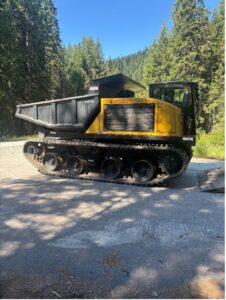
Track truck at Indian Grave Creek site

On Indian Grave Creek there was a velocity constraint from the steepness and straightness of the channel. So, in partnership between TU, the Nez Perce Tribe, and a contractor they were able to go in and form a new channel that would allow easier fish passage. I also learned about the techniques used to form new channels like strategically placed logs, rocks, and dirt. I also, learned what factors are worthy of consideration when doing restoration work,  like determining the goal of the new stream after restoration, and that it is important to evaluate nearby landscape to determine if there was a historical channel. Along with at I got to see some cool machinery at work.

I got to interview TU staff in different departments and places outside Lewiston. One of them is Helen Neville, who is a senior scientist, and she taught me about genetics and how they can play an important role in conservation. I also got to interview Paul Parsons who is the restoration director for TU in Montana. However, before that he was a river engineer which is a subset of civil engineering. I’m currently wanting to go into mechanical engineering but hearing about that opportunity I am now considering doing civil engineering so that I can continue working outdoors.

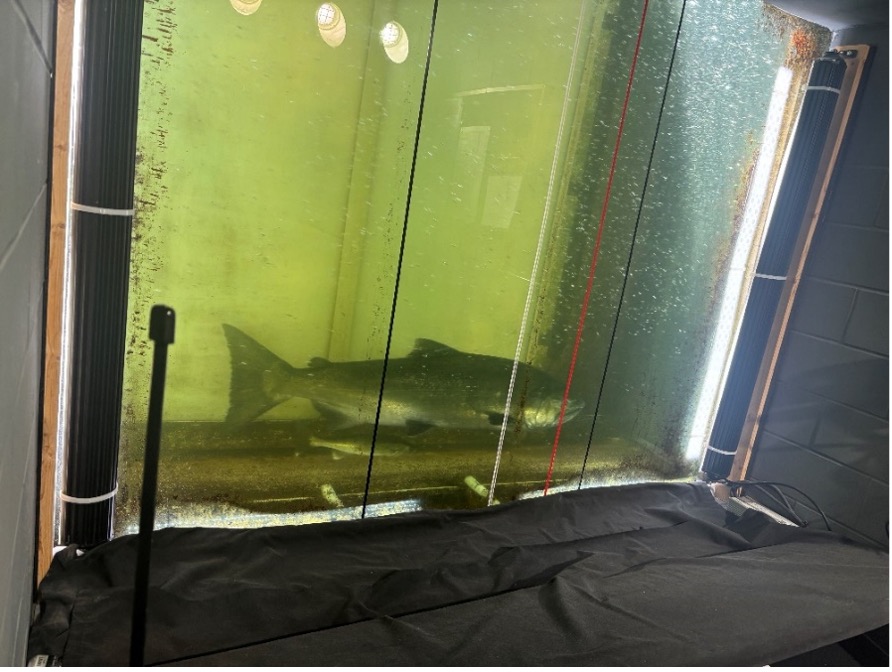
Finally, I got to go see Lower Granite dam with Erin Plue, the director for TU in Idaho. While there we saw the fish ladder and how it works. We then ended up looking through the window into the fish ladder for about thirty minutes seeing all the different types of fish go by. We even saw 1 of 741 sockeye salmon that had gone through the ladder and a giant chinook salmon that was around 40 inches long!

Giant chinook salmon in fish ladder at Lower Granite Dam

Working with the Nez Perce Tribe

During my time I got to work with some brilliant people from the Nez Perce Tribe and got to go on some awesome trips with them. One of my most memorable experiences was when I helped work up lamprey eels to be released at the tribal hatchery on Cherry Lane. During that I was able to handle the eels and get fin clippings. It was super fun trying to handle the eels and be apart of the organized chaos.

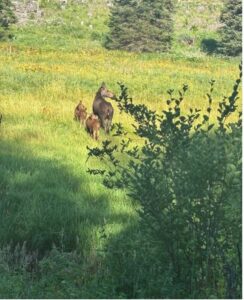
Furthermore, a place that was unforgettable was Musselshell Meadows. In the short time of my internship, I got to see a log jam removal, removal of fish via electroshocking for bridge construction, and the beginning stages of beaver dam analogues getting put in. Also, on one of the drives up there I saw my first Idaho moose and her calves!

The moose and her calves

Although those are my favorite trips, I also got to go on the Lewiston Orchards Irrigation district tour, survey juvenile salmon and steelhead, do a tour of Wallowa Lake, and survey for PIT tags.

Final thoughts

My time with TU this summer has been nothing short of unforgettable, from the stunning wildlife and nature to the amazing coworkers and worksites. In this short time, I’ve learned so much about what conservation looks like by seeing streams get restored, the data collection needed to make it so people can go out in the field and do projects, and hatcheries keeping the populations up. Although this must unfortunately come to an end, I am now going to be able to go into the rest of my life with many great lessons and memories.

Posted in Uncategorized | Leave a comment

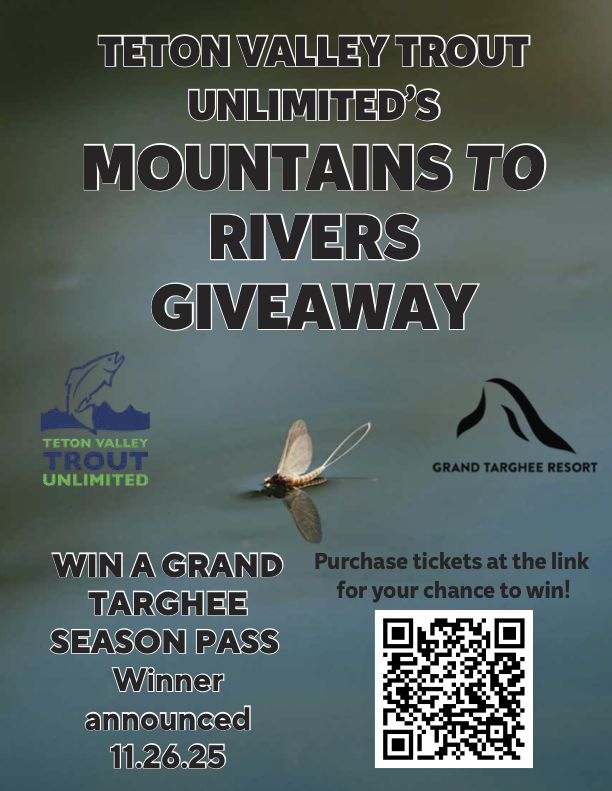
Support the Teton Valley Chapter of TU!

Participate at https://go.tulocalevents.org/4d59ae/Campaign/Details


Posted in Uncategorized | Leave a comment

State Council Meeting October 18

Fall meeting of Idaho Council of Trout Unlimited will be Saturday October 18 at the Fairbridge Suites and Hotel in Idaho Falls.

Posted in Uncategorized | Leave a comment

Another Scholarship Awarded

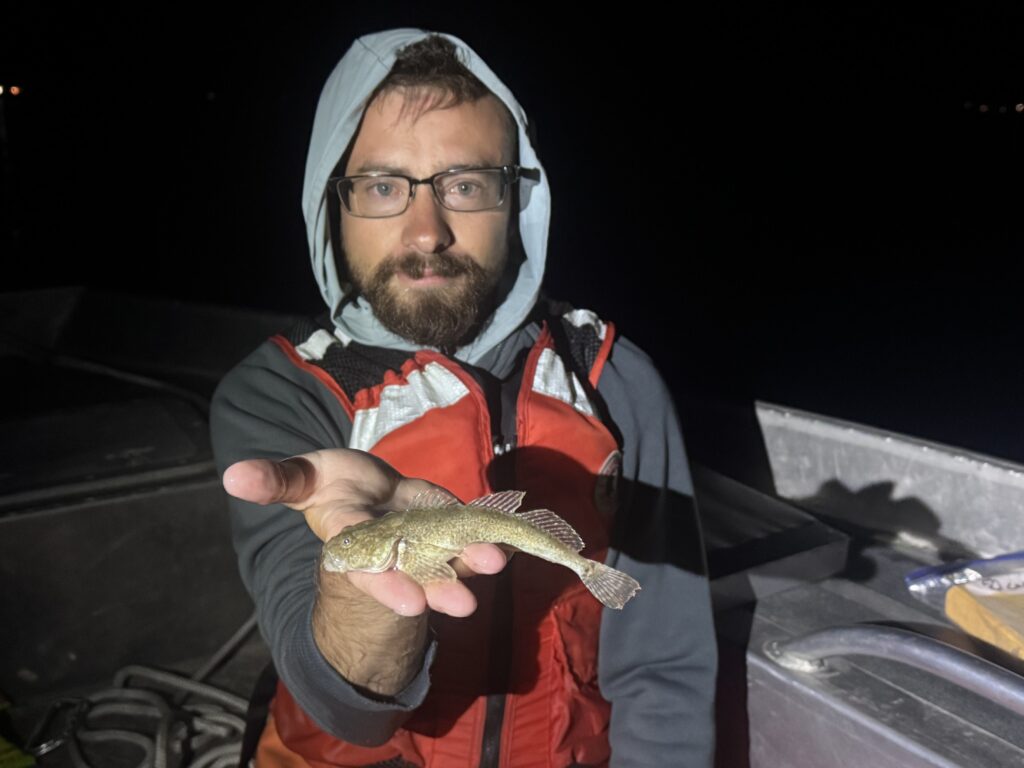
With my deepest sincerity I want to thank you for selecting me to receive the Idaho State Council of Trout Unlimited Graduate Scholarship. In my application I emphasized that by selecting me for this scholarship you were not only providing monetary funds to support the quality of my research but also providing recognition of the importance of a young scientist pursuing the field of Natural Resources. This recognition is the exact support I need to continue my career trajectory and the future of fisheries management in the United States. Finally, the research you are supporting has already uncovered vital information on endemic Bear Lake Sculpin. The results of my work will help the Idaho Department of Fish and Game and Utah Division of Wildlife Resources monitor the species in Bear Lake to ensure their persistence into the future. I cannot thank you enough.

Best,

Ethan Orach

Ethan’s essay for the scholarship follows…

Fisheries managers across the country seek to maintain a balance between recreational opportunities and the preservation of native species. Effective management requires adaptive and sound research that evaluates the past and the present to promote stability in the future of fisheries. As I devoted angler myself, I cherish the recreational fisheries opportunities I have pursued throughout my young adulthood, but my scientific interests in these fisheries is far deeper. As such, I have begun to pursue my M.S of Natural Resources at the University of Idaho. I strive to gain research experience, learn analytical techniques, and develop technical writing skills. I have a commitment to understanding the underlying mechanisms that constitute effective fisheries management. The skills I obtain from my degree will allow me to make impactful decisions as I pursue a career as a Fisheries Biologist.

Prior to pursing my masters, I completed my undergraduate degree in Wildlife Ecology at the University of Maine in 2021. I graduated with Summa Cum Laude honors. As an undergraduate student I was a track and field runner and the captain of the team during my senior year. Also, I was the vice president of the fishing club during my senior year and American Fisheries Society member. I developed my fisheries management work experience by working seasonal positions with Maine Department of Inland Fisheries and Wildlife and Idaho Department of Fish and Game. Through these opportunities, I have become proficient with a breadth of fish sampling gears and a diversity of sampling designs to achieve research objectives. My responsibilities have required analyzing datasets and have allowed me to complete published writing in regional management reports. At this point in my career, I am committed to my research project and will spend multiple summers collecting data in the field.

I believe I should be selected for this scholarship because of my commitment to make a positive impact in the natural resource community. I hope to bring innovative approaches to fisheries management as threats of climate change, habitat degradation, pollution, and the introduction of nonnative fishes increase.


Posted in Uncategorized | Leave a comment

Scholarship Awarded

Noah Frost, a current graduate student at the University of Idaho researching Yellowstone Cutthroat Trout in Idaho’s Blackfoot River, is one of our new recipients of the Idaho State Tour Unlimited Scholarship. The Idaho Council of TU’s scholarship was awarded this spring and will assist with Noah’s continued study in the 2025-26 academic year.

“I have been fortunate to know what I want to do with my career since a young age and my experiences thus far have only solidified these goals,” wrote Frost. “I knew I would need to get a Masters degree to become a fisheries biologist for a state agency.

Noah Frost with one of the denizens of Idaho’s Blackfoot River.

Frost received his undergraduate degree from the University of Maine and moved to Idaho to continue gaining experience in the fisheries field. “Obtaining a Masters degree in a program that is so intertwined with native fish management and working collaboratively with state agencies would give me the best chance of continuing in the field and making a difference in native fish conservation,” said Frost. “Upon completing my degree at the University of Idaho, I will have the skillset and qualifications to work for a state agency such as the Idaho Department of Fish and Game and continue their mission to conserve and manage fish and wildlife resources in perpetuity.”

Frost began his fisheries career in 2016, working a seasonal job for the Maine Department of Inland Fisheries and Wildlife in the northern region of Maine. After several years he landed a permanent technician job in Salmon, Idaho, with the Idaho Department of Fish and Game. Starting in the summer of 2023, spending the next year and a half managing a crew of seven fisheries technicians conducting snorkeling and rotary screw trap work across central Idaho. “Collecting, analyzing, and conveying fisheries data throughout Maine and Idaho proved to me that quality research can make a difference in this field.”

Frost’s essay submitted with his scholarship application is reprinted below.

I will receive additional hands-on fisheries experience and learn important analytical techniques over the course of this two-and-a-half-year project. I will illustrate my ability to work independently, think critically, and communicate my findings effectively. These skills will allow me to apply and compete for fisheries biologist positions with natural resource agencies. Dr. Michael Quist’s lab is well known for producing quality, applied research on native fishes. There is an information gap regarding the Yellowstone Cutthroat Trout population in the upper Blackfoot River. I am conducting a hands-on investigation into what is driving population demographics in this system. I will spend months in the field, likely handle thousands of fish, and maintain remote PIT tag arrays. This work will yield a large amount of information that is not currently available to managers. My research project on this population will allow natural resource managers to make informed conservation decisions regarding the persistence of this population. Furthermore, my findings will be applicable to populations of Cutthroat Trout that inhabit mainstem rivers, lakes, reservoirs, and headwater streams.

I have built meaningful relationships with biologists and managers throughout my time as a technician. The next step to attaining my lifelong goal of becoming a fisheries biologist is completing this Masters program. The financial support from scholarships such as this one will be instrumental in helping me reach this goal for many reasons. Conducting fisheries research is expensive, and my project is roughly ten hours from my home. Additional financial support will allow me to purchase previously unbudgeted supplies (i.e., additional PIT tags, field groceries) and travel to and from my field station to manage remote PIT tag arrays in the shoulder seasons. I am not able to work a second job during this project, and support from conservation organizations like TU will ensure that the final product of this research is of top quality. Ultimately leading to meaningful conservation implementation and compounding benefits to Cutthroat Trout generally. Again, I thank you for your consideration and look forward to hearing back.

Noah Frost

Posted in Uncategorized | Leave a comment