Final Agenda Idaho State Council of Trout Unlimited

Final Agenda Idaho State Council of Trout Unlimited

Boise, Idaho April 26, 2025

Idaho Fish and Game Headquarters, Owyhee Room

8:30 Coffee / Juice

Sign In

9:00 Start Business Meeting

-Quick Introductions around the room

-Review prior spring meeting minutes and approve.

-Review handout of current contact information and update if needed

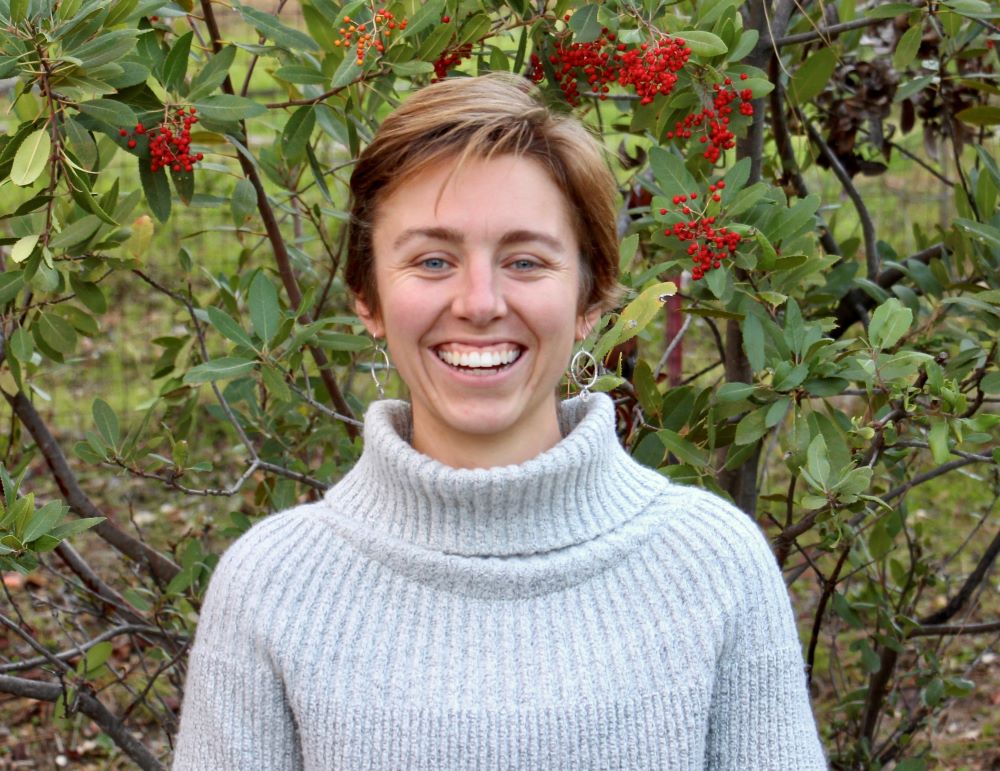
9:30 New TU Idaho State Director Erin Plue

10:15 Break

10:30 NLC Report / M.E. Sorci remote

10:45 Treasury Report Andy

11:00 Begin Chapter Reports if there is time

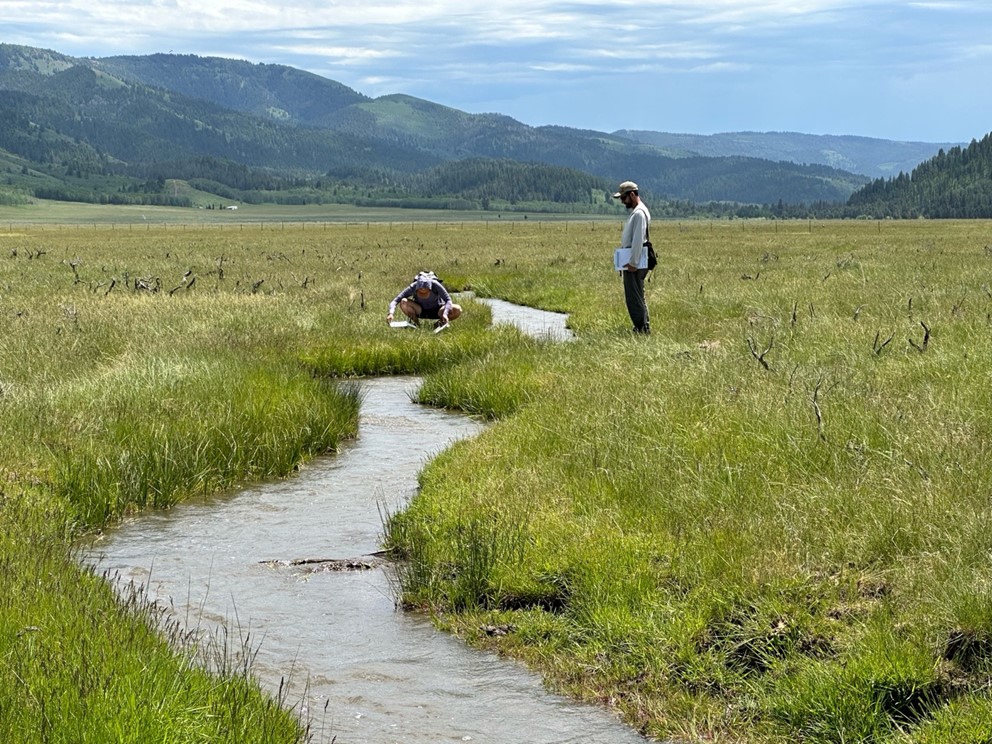
11:30 TU Scientist Dan Dauwalter & Emma Lundberg

12:00 Lunch

12:45 IDFG Fisheries Bureau Chief Lance Hebdon

1:45 TU Staff Reports Michael Gibson

2:15 Chapter Reports / Significant Accomplishments for the past

year.

4:00 Adjourn

5:00 Dinner TBD

Posted in Uncategorized | Leave a comment

Restoration in the Sawtooth National Forest benefits unique Idaho redbands and sculpins

By Anthony  Prisciandaro, South Fork Boise River watershed manager

In 2022, Trout Unlimited and the U.S. Forest Service embarked on a five-year $40 million national Keystone initiativeto increase the scale of watershed restoration on our national forests and grasslands—home to many of America’s most important native trout and salmon species and the source of drinking water for some 180 million people and 68,000 communities.

This work builds on long-standing restoration partnerships between the Forest Service and TU and expanded thanks to federal investments provided by the Bipartisan Infrastructure Law and Inflation Reduction Act.

The Bassett Gulch Project near the Big Wood River is one of the partnership’s funded projects in Idaho.
Unique populations of native fish

The project is located in Central Idaho along Warm Springs Creek just outside of the resort towns of Ketchum and Sun Valley. The creek is a part of the Wood River watershed, which is a TU Priority Water and a popular trout fishing destination; the world-renowned Silver Creek is also part of the Wood River system.

Warm Springs Creek is the largest tributary to the Big Wood River and supports fluvial Redband trout as well as Wood River sculpin. The Redband trout that use Warm Springs Creek for spawning and rearing migrate down to the Big Wood River to grow larger and occasionally pose for photos with happy anglers.

These are both special populations of native fish. Idaho Fish and Game have recently shown that Redband trout in the Big Wood and its tributaries have been genetically “isolated for a long period of time, and represent a unique, old and previously undescribed lineage of Oncorhynchus mykiss.” Wood River sculpin are endemic to the Wood River Basin. They are listed as a sensitive species by the Forest Service and are listed as a species of long-term concern by the state of Idaho.

A mining legacy

The Bassett Gulch Project is located at the confluence of Warm Springs Creek with West Fork Warm Springs Creek and the junction of Forest Road 227 and Forest Road 049.

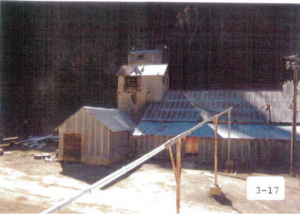
From 1950 to 2000, the mouth of the gulch operated as a mining mill site. Silver, gold, barite and lead ore mined elsewhere was brought to Bassett Gulch for processing.

Bassett Gulch itself is a very small drainage with no defined channel or other evidence of surface water flow. Fortunately, this limited impacts of contaminants to Warm Springs Creek, although sampling detected compounds like mercury, lead, arsenic, barium and cyanide above background levels within the milling operation footprint.
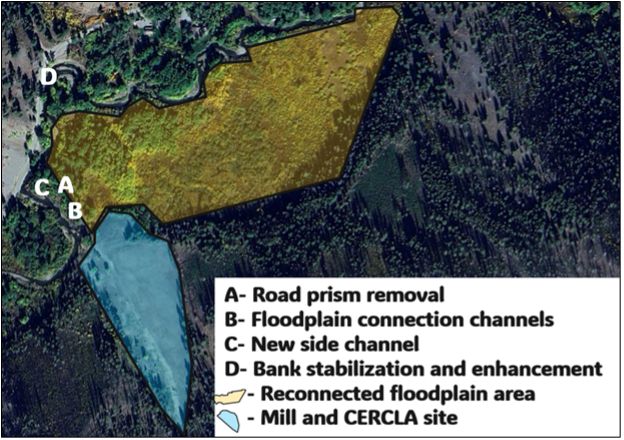
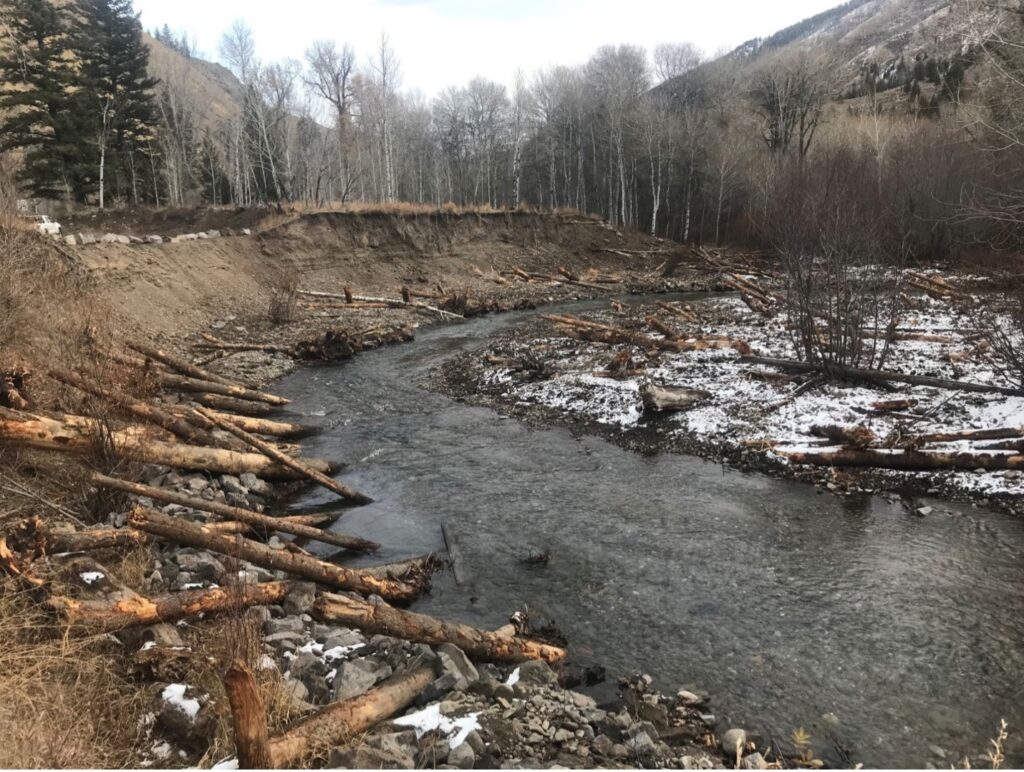
The road infrastructure at the site acted as a levy disconnecting 30-acres of floodplain and increased flow velocities in the section of the creek adjacent to Forest Road 227. High flow and the associated erosion required annual maintenance to protect the road. It also added fine sediment to Warm Springs Creek, which increased turbidity and contributed to a loss of fish habitat quality and diversity.

To ensure the detected contaminants did not spread over time, the Forest Service completed a Comprehensive Environmental Response, Compensation and Liability Act (CERCLA) removal action in November 2004. As a result, the mill buildings, ore processing equipment and 30,000 cubic yards of tailings in the impoundment area and 7,600 cubic yards of tailings in the riparian area were removed in the following years. Once the CERCLA removal action was completed the bridge over Warm Springs Creek was also removed.

Stream restoration in the Sawtooth National Forest

The goals of the Bassett Gulch Project were to enhance instream, wetland and floodplain habitat while reducing ongoing maintenance costs required to protect the road. It is the first project on the Sawtooth National Forest (SNF) funded by the Forest Service and Trout Unlimited’s Keystone agreement.

TU Idaho’s unique experience, relationships and efficient contracting process allowed for a highly expedited timeline. The project moved from initiation to construction completion in just one year.

The SNF staff, as well as dedicated design and construction contractors, were integral in meeting this timeline. The SNF completed the required NEPA process and finalized a Watershed Restoration Action Plan in the first half of 2024. Forest Service and TU staff conducted a site visit while the design contractors conducted surveys in the snow in January of 2024. Construction contractors worked diligently through early season snowstorms to complete the project ahead of schedule.

“This project has been a priority for the Ketchum Ranger District for 20 years, and we couldn’t have gotten this done without the partnership with Trout Unlimited, and the project came out better than expected because of this partnership,” explained Ryan Santo, USFS fisheries biologist.

Roads, Redbands and Sculpins

Although one of the main goals of the project was to protect road infrastructure throughout the SNF, the project was also designed for multiple habitat improvements benefiting native Redband trout and Wood River Sculpin.

Up to 30 acres of previously disconnected floodplain will now be re-activated during high spring flows. New instream rock and wood structures will provide year-round fish habitat diversity while the side channel and floodplain connection will provide refugia during high flow events.
Next spring and early summer will be an exciting time at Basset Gulch. As a part of the restoration work, we planted over 900 potted plants and spread 50 pounds of seed. It will be great to see this vegetation come to life.

The Forest Service has photo locations set up so we can share how the project looks during high flows and as the vegetation recovers. Keep an eye out for more updates in the future on TU’s social media channels.

Posted in Uncategorized | Leave a comment

Fish Passage Restored in North Fork Coeur d’Alene River Tributary


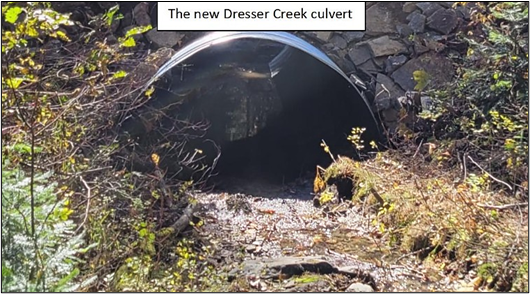
The Dresser Creek culvert after replacement allows fish passage

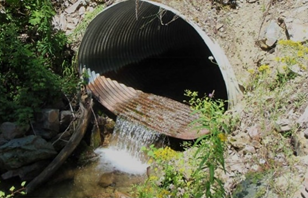
After many years, westslope cutthroat trout have free access to two miles of cold, high-elevation habitat that was blocked by an undersized culvert near the mouth of Dresser Creek in the North Fork Coeur d’Alene River headwaters. This single obstacle had a big impact on the fish of this drainage high in the Idaho Panhandle National Forests (IPNF). After decades of waiting and planning, a collaborative effort seized the opportunity to replace the culvert and restore passage.

Securing the Resources
Despite being a high-priority project for the IPNF, replacing the culvert was a difficult project to implement. Securing the necessary funding to implement the project was a key hurdle.

Thanks to a national keystone agreement between the USDA Forest Service and Trout Unlimited, the project was finally able to move forward with funding from the Bipartisan Infrastructure Law and Inflation Reduction Act. The new funding agreement made it possible for the existing Dresser Creek culvert to be replaced with a larger squashed steel structure.

Making it Happen
A local contractor, J&P Services, completed the Dresser Creek culvert replacement in October 2023 with construction oversight by staff from Trout Unlimited and IPNF. After purchasing the new squashed steel culvert, hauling the necessary rock material, installing the new culvert, and resurfacing the road, the construction of the project was finished. According to Trout Unlimited’s North Idaho Program Manager, Erin Plue, “Stream work on the downstream side of the culvert allowed the slope in the culvert to be reduced, helping to assure long-term benefit of this pipe.”

Thanks to working together, the migration of westslope cutthroat trout and other aquatic species is now restored into this high-quality stream habitat.

Before Dresser Creek culvert replacement

After Dresser Creek culvert replacement

Posted in Uncategorized | Leave a comment

In Memory of Bob Dunnagan

Bob Dunnagan 1937-2024

By Ed Northen

A heavy fog lay on the valley floor in Victor, Idaho as a soft light bathed the summits of the Tetons rising above the midst. The Idaho Council of Trout Unlimited was gathered on this morning of October 19 for our Fall meeting, when the news of Bobs passing was shared.

We paused our meeting and shared stories about Bob, which resulted in lots of laughter at his antics, gratitude for his tireless contribution to conservation and the memories of friendship and camaraderie shared.  We raised our coffee mugs and drank a toast to a friend and a life well lived.

We also donated $5,000 dollars to the Trout Unlimited, Idaho State Council Graduate Scholarship fund, in Bob’s memory.  A fund which Bob initiated when he was President of the Idaho Council, and a scholarship fund that continues to benefit students who pursue careers in fisheries.

Sending  thoughts of peace and comfort to family and friends of Bob, in this time of loss.  Please know Bob will continue live on in our memories and hearts.

Posted in Uncategorized | Leave a comment

Getting My Feet Wet with Members of the Snake River Cutthroat Chapter on Diamond Creek by Hannah Murphy

SRC members and staff from Rockin’ T Construction problem solve bolt placement before reinstalling the fish screen

Last month I was kindly invited by my predecessor Matt Woodard (avid fly-fisherman, Snake River Cutthroat (SRC) Chapter member and current Idaho State Council Chair) for a day of hard, muddy work on Diamond Creek in the Upper Blackfoot system.

Although retired, Matt has taken it upon himself to help maintain fish screens that were installed during his time as a Project Manager in the area. Using a combination of funding from the Natural Resources Conservation Services (NRCS), the Upper Blackfoot Confluence (UBC) and Trout Unlimited (TU), this project aimed to benefit upstream fish passage at the Diamond Creek Irrigation Diversion. These fish screens allow water to pass into the irrigation channel while keeping Yellowstone cutthroat trout and other fish out.

Thanks to the help of friends and colleagues at Rockin’ T Construction, we were able to remove the screens for maintenance which included lifting both screens out of the concrete boxes and clearing sediment and debris built up. We helped to shovel and push additional sediment out that built up in the bottom of the boxes. After some tinkering with bolts and drilling a few new holes on the columns that hold the screens in place, we were ready to reinstall.

Hannah Murphy sprays the inside of the fish screen to help remove sediment and debris before it will be reinstalled

Working on a project that was implemented over ten years ago goes to show how diligent we must be as conservationists and stewards of the land. It felt rewarding to see one of Matt’s projects years later that is still being maintained. Matt’s passion and continued commitment to helping these river systems are part of why TU feels so cohesive, because everyone simply cares. I’m honored to be a part of the Idaho team and work across the Southeast region.

As I’m quickly discovering, there is a ton of work leading up to boots-on-the-ground days in the field. Getting out on the landscape makes computer work and contract preparation even more worthwhile. The field days are undoubtedly the rewarding part. Shout out and huge thank you to Paul, Craig, Andy, Troy, and Josh for the lift and taking the time. I appreciated the opportunity to join.

written by Hannah Murphy, TU Southeast Idaho Project Manager


Posted in Uncategorized | Leave a comment

Summer 2024 Internship Experience – by Grace Sobotta

When first stepping into the world of conservation, I knew very little of it, and didn’t know much beyond the basics. The first few weeks of interning with a conservation group were eye opening when learning about the different challenges and rewards that this organization sees in their conservation projects.

During my internship experience I even took a detour to spend a month maintaining trails on the Nez Perce National Historical Trail that runs through Idaho. This detour added another layer to my outdoor experience. When that experience came to a close, I was ready to jump back into my journey with Trout Unlimited (TU).

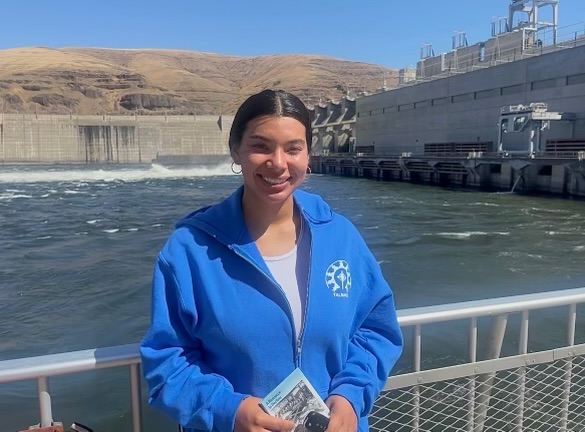
Trip to Lower Granite Dam

An introduction to my TU journey

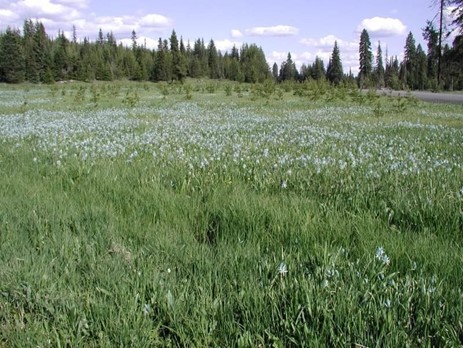
The first three weeks were a perfect introduction to the kind of work TU does. One of the days of my first week I had the opportunity to head out to Musselshell Meadows to participate in a Camas count. Camas is culturally important for subsistence, which is why I enjoyed learning about it. I had no prior experience of counting camas, but after picking up on it I ended the day feeling I did something meaningful for natural resources.

Musselshell Meadows

In between fieldwork, I would spend my days in the office, attending meetings, which allowed me a deeper look into how TU operated. Taking notes on meetings, and meeting some of the staff at TU helped me understand the various roles within the organization.

Work on the Nez Perce trails

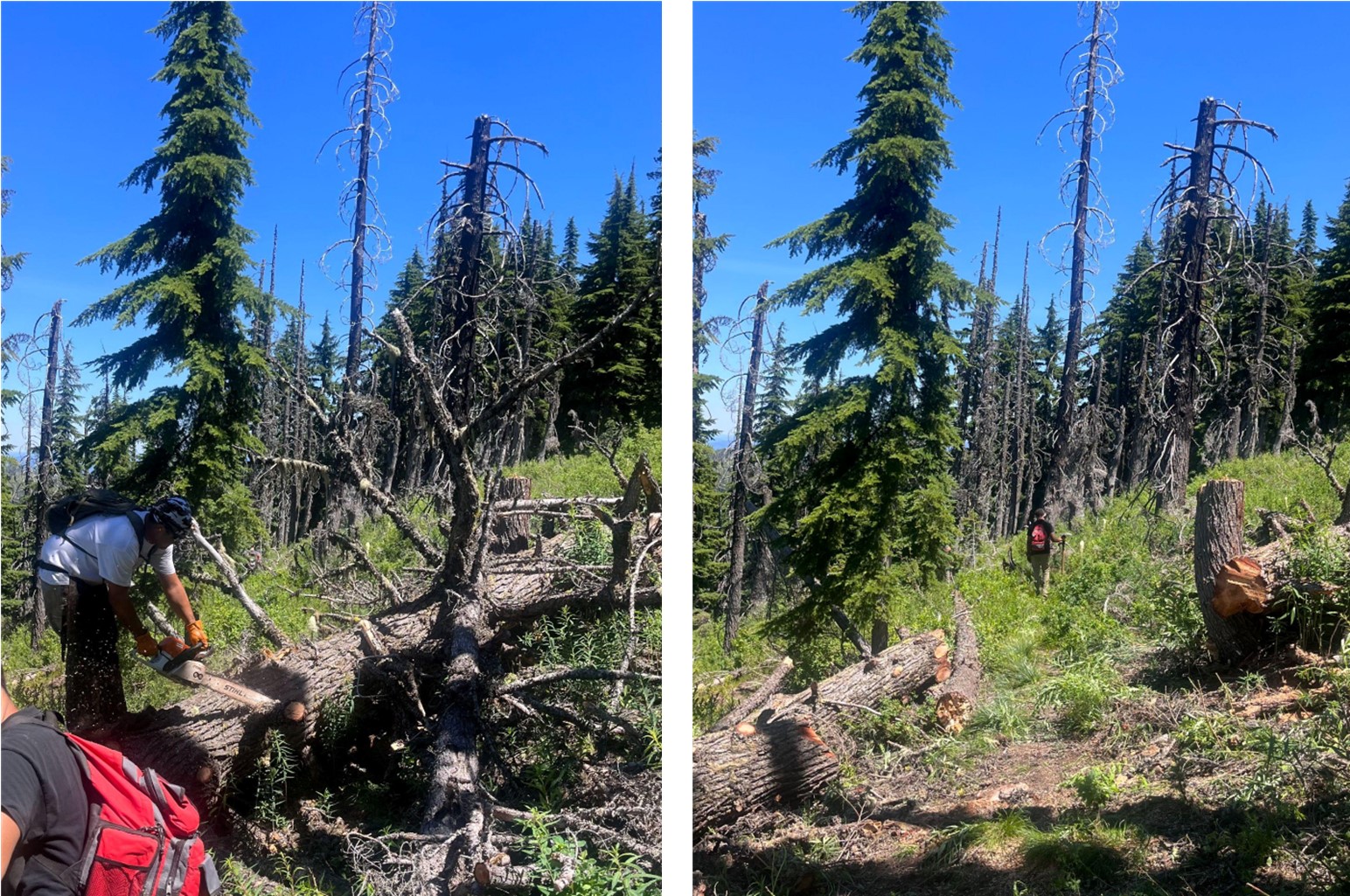
After the initial first weeks with TU, I switched it up and spent four weeks doing trail maintenance. This was an experience away from my TU internship, but I still feel I learned about conservation and the environment from it.

Throughout this month our group set out to clear and maintain trails on the Nez Perce National Historical Trail. It was a tough but satisfying experience once we were able to see the trails become useful again after clearing them. We even met a group who hiked the same trail we cleared the day before.

Nez Perce Trail Clearing Before and After

Returning to TU

Returning to TU after my time out in the mountains, I came back to a packed schedule for the next four weeks, all exciting activities I couldn’t wait to be a part of.

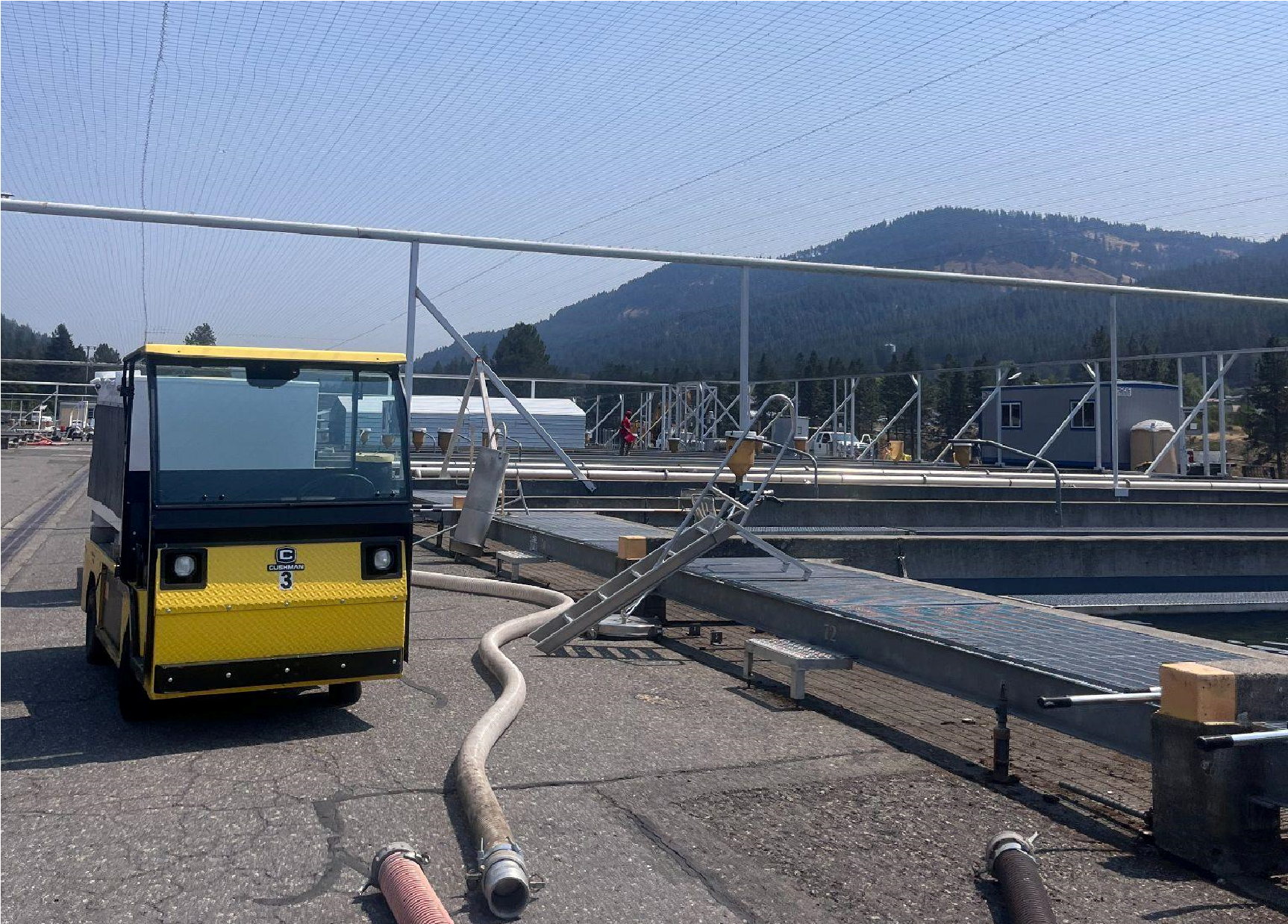
One of my most memorable days was spent at the Dworshak Fish Hatchery. At the hatchery, I got hands-on experience with salmon, and learned more about how to take care of them, but also learned about their reproduction when spawning day came.

Watching and participating in spawning was an experience I will not forget. We sorted through nearly 2,000 fish in one day, identifying which females were ready to release eggs. On this first day of spawning, there were only about 100 females ready to spawn.

Fish Ponds at Dworshak Fish Hatchery

Another insightful day I had was seeing the Knock on Wood project which was located at Lolo Creek past Musselshell Meadow. This project focused on creating better habitats for fish by placing logs into water at different spots along the creek. The idea behind this is the logs will provide shelter, and improve stream quality for the fish.

A couple of days in Wallowa

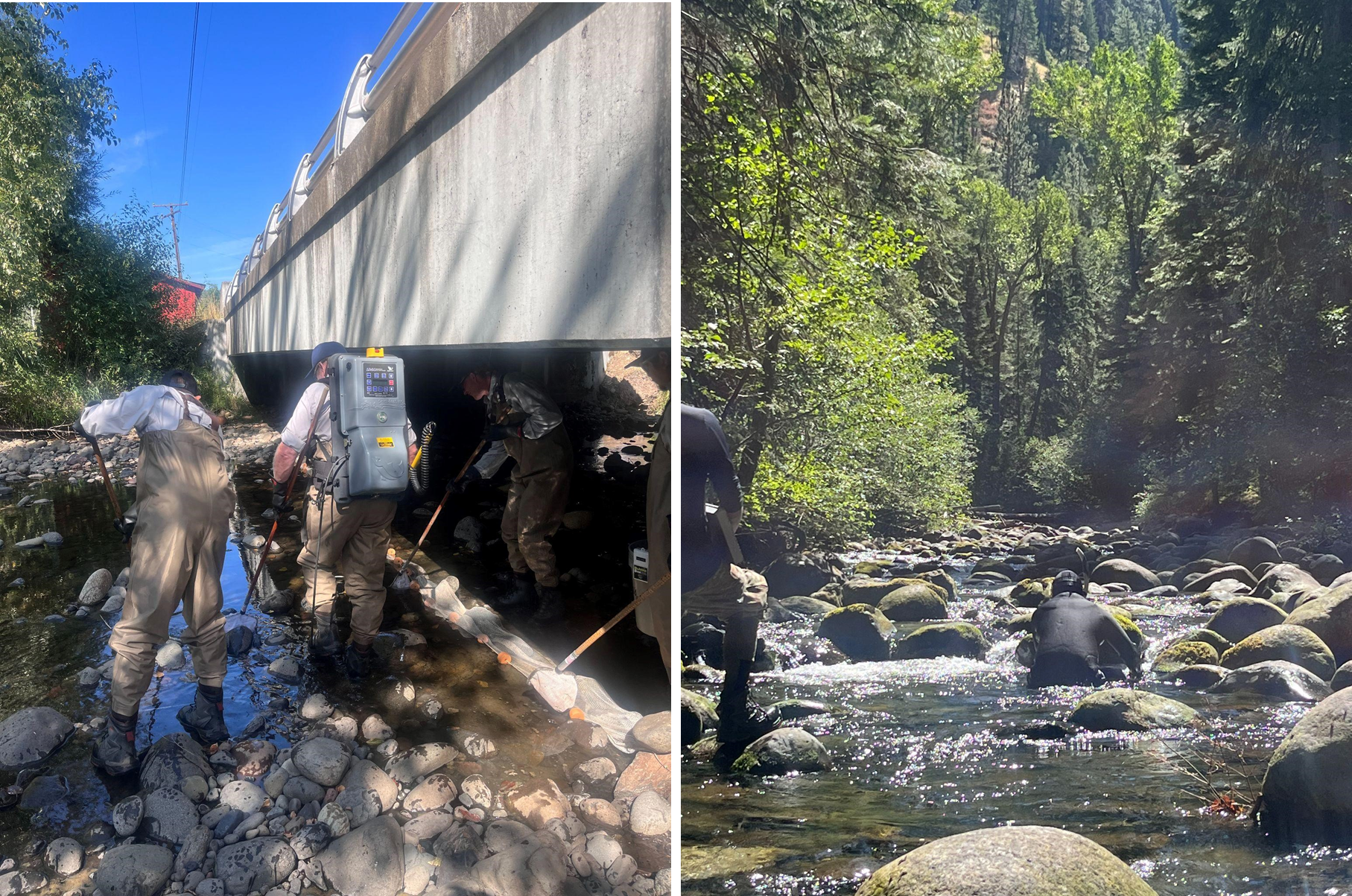
For one of the last experiences I had with TU I took a trip to Wallowa, OR and met up with a group from the Nez Perce Tribe Fisheries Watershed Department. The first day they started out with snorkeling at Bear Creek, where I got to see how they identify and measure fish underwater. I spent my time with them jotting down the data and learning about the process.

We switched gears slightly the next day and began electrofishing further down Bear Creek in the town of Wallowa. The fish were netted during this process, and were much easier to net with electrofishing. After all the fish were collected, they were measured, weighed, and sent back into the stream.

Electrofishing and Snorkeling at Bear Creek

Conclusion

As the summer comes to an end, so does my time with Trout Unlimited. I am leaving this internship with new knowledge and plenty of hands-on experiences. Although my journey with this summer internship is over, I will be taking so many of the lessons I learned throughout it with me.

Posted in Uncategorized | Leave a comment

New Leader at Trout Unlimited Brings Fresh Vision to the Upper Blackfoot River

TU’s Southeast Project Manager Hannah Murphy

Media Contact: David Anderson, Facilitator

Upper Blackfoot Confluence

208-866-1142

danderson@upperblackfoot.org

https://www.upperblackfootconfluence.org

New Leader at Trout Unlimited Brings Fresh Vision to the Upper Blackfoot River

Partners in the Upper Blackfoot Confluence (UBC) met recently to review a list of stream restoration projects proposed by agencies, such as Idaho Department of Fish & Game, and the UBC project manager, Trout Unlimited, including approval of project funding for the year. The UBC partners recently approved over $275,000 to be invested in projects to be started and/or completed in 2024. Part of that funding includes dedicated technical and community outreach support from Hannah Murphy, the new Southeast Idaho Project Manager for Trout Unlimited, whose enthusiasm and collaborative spirit promise to drive forward restoration and conservation efforts in the region.

Murphy, who has a stream restoration background, expressed a keen interest in expanding her knowledge about fish and their habitats. “I’m most excited about learning more about Yellowstone cutthroat trout and other fish species” she said. “In my previous positions, I did stream restoration work, but fish weren’t necessarily a priority. Here, I get to focus on stream restoration that specifically benefits fish.”

Her approach is deeply collaborative, acknowledging the diverse stakeholders involved in UBC projects. “It’s a unique partnership collaboration, and everyone has individual and group goals,” Murphy noted. She emphasized the importance of respecting and working with these varying interests, especially when addressing practical issues like fencing and stream crossings.

Murphy’s strategy involves a careful, data-driven approach to restoration. She plans to “chip away at a big landscape, little by little,” focusing initially on areas like Diamond and Kendall Creeks. By leveraging data, she aims to identify and prioritize tributaries and upland areas of the Upper Blackfoot River watershed that would most benefit from project work and restoration.

Her dedication to fostering relationships is evident in her proactive engagement with different partners in Caribou County since starting her role at Trout Unlimited. “I’ve met more people in the last six months across the landscape than I did in probably years with my previous position,” she remarked. This network-building is crucial for the success of the UBC projects, ensuring that the goals of individual stakeholders are met while advancing the overarching mission of restoring habitat for Yellowstone cutthroat trout in the Upper Blackfoot River watershed.

Historically, native Yellowstone cutthroat trout thrived in the Upper Blackfoot River. Over the years, human activity has degraded key river habitat, and fish populations declined. The UBC partnership was founded in 2012 as a voluntary stewardship project solely focused on reversing this trend. UBC’s efforts have opened 25 miles of historic spawning habitat and improved the overall health of the upper watershed.

For more information on the Upper Blackfoot Confluence and ongoing projects, visit UBC’s official website (http://www.upperblackfootconfluence.org).


TU staff conducting redd counts on Kendall Creek, Caribou County


Posted in Uncategorized | Leave a comment

State Council meets April 27

The next meeting of the Idaho State Council of Trout Unlimited will be Saturday, April 27, 2024, at the Idaho Fish and Game headquarters in Boise. More information to follow.

Posted in Uncategorized | Leave a comment

Internship Experience – JC Sobotta

My name is JC Sobotta, I’m a member of the Nez Perce Tribe and I was an intern for eight weeks during the 2023 summer. My experience has been a combination of working in the office in Lewiston, from home or going out into the field. Working in the office has been nice because I sometimes got distracted working independently.

Learning about salmon and what the Tribe and Trout Unlimited are working on together has been new and important for me to learn. I also liked going out to the field with the fisheries staff and seeing projects that were being developed like BDAs and logs that were designed to mimic the form of a natural beaver dam. A beaver Dam Analog (BDA) can be used to increase probability of a successful beaver translocation by creating immediate deep-water habitat that reduces the risk of predation.  Knowing that both TU and the Tribe want to do what they possibly can to help and care and recover rivers and streams for our fish is very comforting for me. Being a Tribal member, this internship has helped me to learn more in depth what and how our Tribe is working with TU to make a difference.

Visting Lower Granite Dam

One thing that I’ve liked doing was going to the field and meeting some of the people who work for the Tribe and learning what they’re doing. I really enjoyed it. Seeing the BDAs, and the logs that they put into the creek to help start up dams was a good opportunity to learn and just to see how they did it. Meeting and getting to know the employees and seeing how good they are at their job has been great. Having very nice and easy people to work with like from Kira to Aaron, Dalton, Anthony, and some of the people who work for the Tribe has been very helpful and just an honor to work with.

BDA

TU and the Nez Perce Tribe have few projects they work on together, and a big one is removing the four lower snake river dams.  These dams are called Ice Harbor, Lower Monumental, Little Goose, and Lower Granite. As the Tribe has warned, these four dams decimated the Snake River salmon and steelhead. The four dams transformed the Lower Snake River into a series of warm, shallow lakes where predators, dam turbines, and hot water kill too many migrating salmon.

The salmon was the first to give of themselves to provide nourishment for the people, in return the people would always protect and speak on their behalf. Today, the Tribe is at a pivotal point in their fight to protect and restore several species of salmon that are near extinction. This summer I learned about the Lower Snake River dams and their devastating impact on the fish and on Tribal people.

The opportunities and experience I gained this summer will come in handy

the rest of my life. Whether I have a career similar to this kind of work, or anything else, I already know I’ll have a big thanks to this internship and experience.

Fishing the Lochsa River with TU staff.


Posted in Uncategorized | Leave a comment

In Memory of Arn Berglund

From the East Idaho Fly Tying Expo Facebook page. Reposted here for our TU community.

The untimely event of June 22nd leaves us with heavy hearts and a lingering disbelief. Arn Berglund, 70 years old and a longtime member and leader of the Snake River Cutthroats, was killed in a traffic collision while riding his bicycle.
Arn, a unique personality, championed protection of cold-water fisheries and their habitat both professionally and in retirement. As much as time permitted, he was in the field conducting, directing, or planning actions to preserve or improve.

Arn Berglund at the Idaho TU State Council meeting in Boise in April.


These, for Arn, were lifetime commitments. They began in southwestern Connecticut with limited natural habitat. He learned fly fishing through visits to Connecticut’s Farmington River drainage where he also began ice fishing. In doing these activities he came to know the seasonal changes of the natural world. But Connecticut was limited for his growing outdoor interests, so it was off to the University of Idaho to obtain a Bachelor of Science degree in fisheries management. After completion, he did seasonal jobs in such as Idaho’s Clearwater drainage. Then Arn went on to Winnemucca, Nevada to study the status of cutthroat and red band trout. Next was a move to Utah state BLM office for more agency fisheries studies. When in the early 2000s an opening arrived in the Idaho Falls Bureau of Land Management office, he applied for then filled the opening to conduct frequent field studies. Colleagues recall his good nature and energy while in the office being tasked to compile results. Such characteristics gained him hunting and fishing companions from among fellow workers. He discovered upland game bird and pheasant hunting, and through these offered some wildlife actions. When hunting season came about off went his fly-fishing hat and on went his hunting hat. With beloved dogs in tow, it was off to the hills. Winter meant ice fishing and coaching youth hockey teams.

But the status of regional cold-water fisheries was always in mind. Continuing through retirement years he tackled cold water fish situations on waters large and small. From endangered cutthroat trout in the east in such as Tincup Creek and Grays Lake Outlet to endangered bull trout in the Little Lost River and other drainages to the west, it was pure joy for Arn to apply efforts and skills to their well-being. Fisheries study also entered his private life: wife, Laura, is a practicing fisheries biologist for the U. S. Fish and Wildlife Service office in Pocatello. Son Eric became, like his dad, a fly fisher of note. He joined the Snake River Cutthroats (SRC) a Trout Unlimited and Fly-Fishing International affiliate and quickly became the conservation chairperson. It was a natural action because of his connection with agency personnel and his own passion for natural resources. From there he moved on to chair the East Idaho Fly Tying and Fly-Fishing Expo and organizing youth and volunteer actions within. Then in 2021 he became president of the SRC for two years always continuing conservation activities.
Few are the persons as dedicated and accomplished as is Arn in his chosen field. The same can be said about his generosity in sharing status information. The name “A Trout’s Best Friend” was fashioned for Bud Lilly years ago. In east Idaho we have another person worthy of that name. That person is the unforgettable Arn Peter Berglund.

Arn with the TU State Council in April

Posted in Uncategorized | Leave a comment