Noah Frost is a repeat recipient of a scholarship from Idaho Trout Unlimited. He will continue his studies at the University of Idaho, 2026-27. His essay below get into the cutthroat trout research in the Blackfoot River. – Ed.
Fisheries managers and conservation organizations are lacking Yellowstone Cutthroat
Trout population metrics in the upper Blackfoot River, Idaho. I am conducting a hands-on
investigation that will identify factors influencing population demographics in the system.
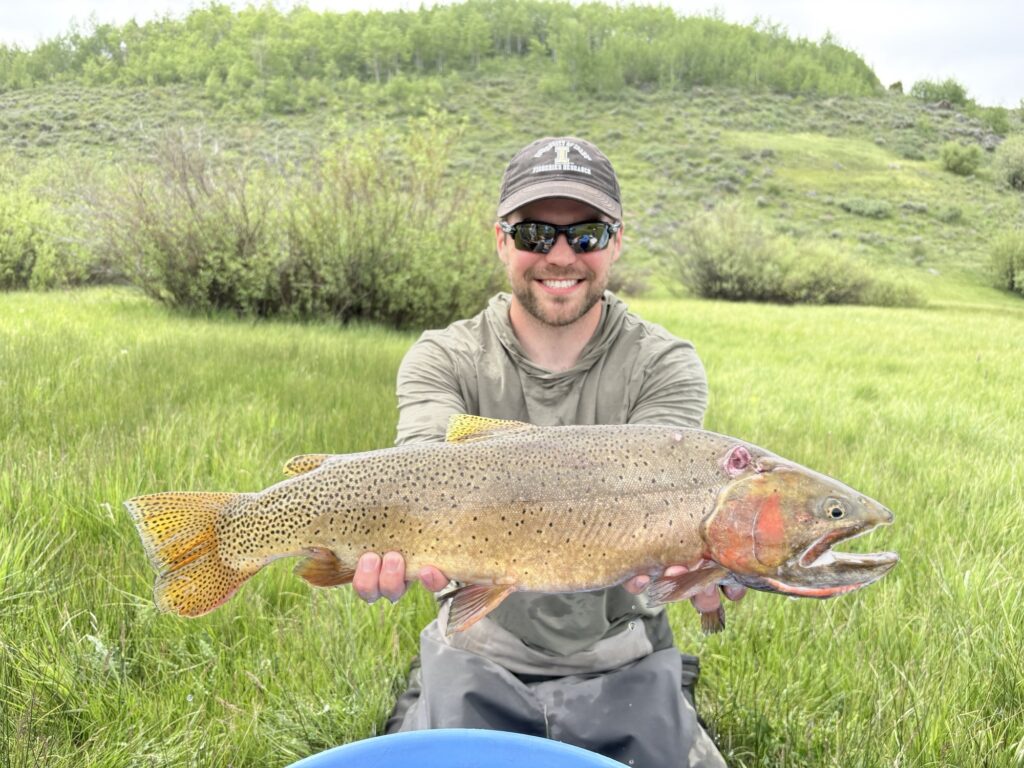
Over the past year, I developed a study design and sampled over 4,400 Yellowstone Cutthroat Trout throughout 37 miles of mainstem habitat. I tagged over 3,000 Yellowstone Cutthroat Trout with passive integrated transponder (PIT) tags and installed five PIT antennas throughout the study area to document movement of tagged fish. The first year of my research was incredibly successful. Results from my research will identify factors limiting fish production and survival in the system, ultimately informing conservation measures (e.g., habitat restoration) in the study area and in similar systems throughout the region.
My first field season yielded a large amount of fish and habitat. During the next year, I
will replicate field sampling, analyze collected data and write a thesis. In addition to hands-on fisheries experience, I will continue to learn advanced analytical techniques and improve my scientific writing. These skills will allow me to apply and compete for fisheries biologist positions with natural resource agencies. Perhaps most important, my work in the Blackfoot River is highly collaborative and communication among state, federal, and non-governmental organizations will be critical to effective management in the system.
I have built meaningful relationships with biologists and managers throughout my time as
a technician. The next step to attaining my lifelong goal of becoming a fisheries biologist is
completing this Masters program. The financial support from scholarships such as this one will be instrumental in helping me reach this goal for many reasons. First, my field station is located on public land at 6,500 ft elevation in the headwaters of the Blackfoot River. I live in a tent from May through August while sampling fish and surveying habitat. As you may imagine, living and working off the grid for several months is a challenging endeavor that requires the highest quality gear and extensive preparation. Next, documenting movement of Yellowstone Cutthroat Trout as temperature decreases during the fall is incredibly important for describing life history structure and identifying potential thermal constraints. Travel from Moscow to my field station during the semester to manage PIT arrays increases my financial strain during this program.
Additional financial support will allow me to purchase previously unbudgeted supplies (i.e., additional PIT tags, field groceries) and travel to and from my field station to manage remote PIT arrays during the shoulder seasons. I am not able to work a second job during this project, and support from conservation organizations like TU will ensure that the final product of this research is of top quality. Ultimately leading to meaningful conservation implementation and compounding benefits to Cutthroat Trout generally. Again, I thank you for your consideration and look forward to hearing form you.